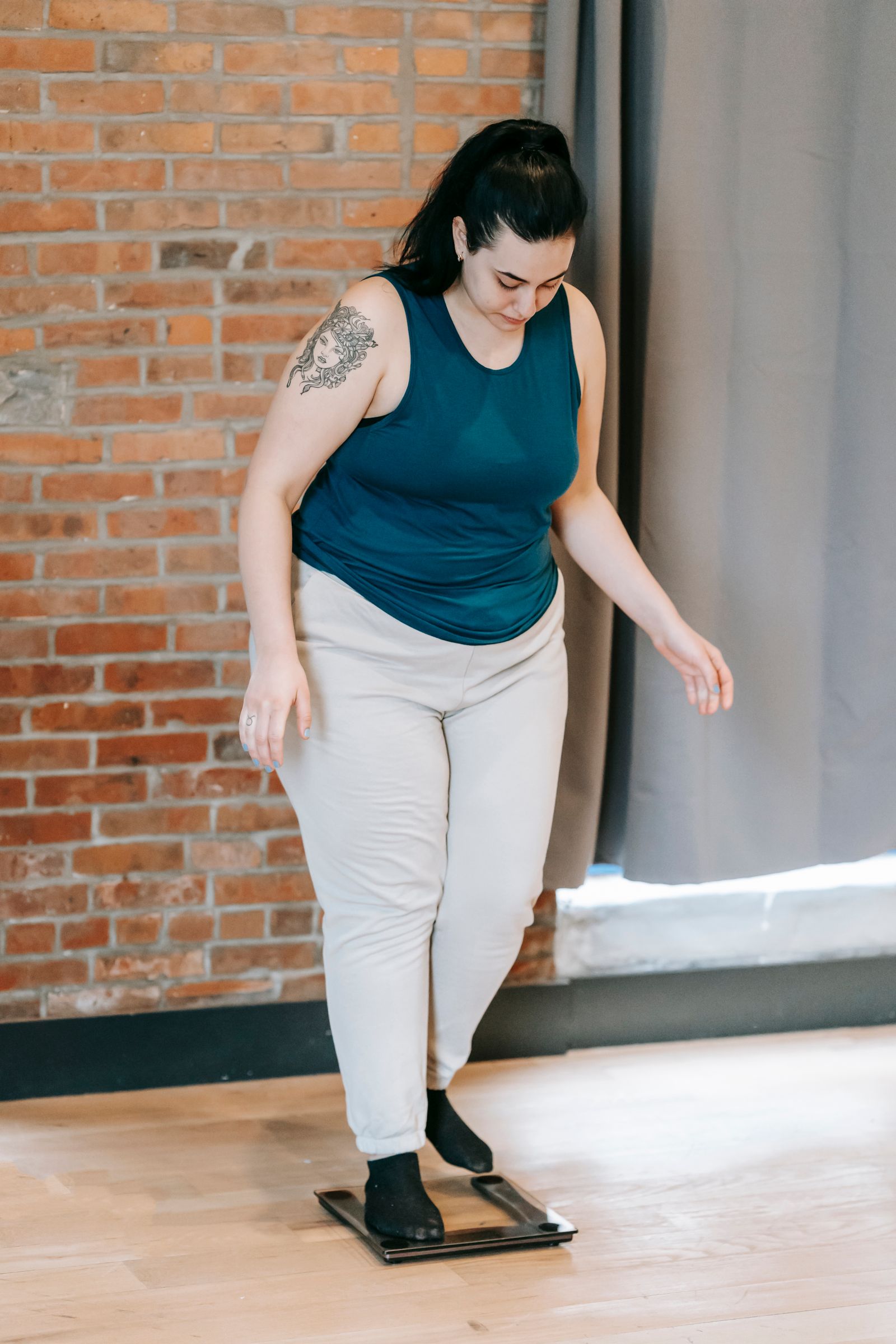
Picture an ordinary morning.
You wake up, walk into the bathroom and step onto the scale.
68.5 kg.
Exactly the same as last week.
But you've been trying so hard! You went to the gym three times, didn't order pizza and barely touched anything sweet.
You even turned down your favourite croissant last night.
And for what?
An unpleasant thought crosses your mind: “Maybe my metabolism is just slow.”
Before you start cutting your portions even further, it's worth understanding what may actually be happening to your weight.
If the scale isn't moving, does that mean you're not losing fat?
Not necessarily.
A scale measures your total body weight, not how much body fat you have.
That number is affected by water, the contents of your digestive system and many other factors.
Perhaps you ate something salty yesterday. Your body temporarily retained more fluid, making the number on the scale higher this morning.
Or maybe your period is approaching. Hormonal changes can also cause temporary weight fluctuations.
Even an unfamiliar, demanding workout can be followed by short-term fluid retention while your muscles recover.
So it's possible for body fat to decrease gradually without that change being immediately visible on the scale.
Cleveland Clinic explains that everyday weight fluctuations are normal and don't necessarily reflect changes in body fat.
One number on one morning doesn't tell the whole story of your progress.
Why does weight loss often slow down after the first few kilograms?
It's a familiar situation: your weight drops quickly when you first change your routine, then seems to stop moving a few weeks later.
There may be a perfectly ordinary explanation.
When you initially change your eating habits, your body uses some of its stored glycogen. Water associated with those stores is lost as well.
That's one reason early changes on the scale can seem particularly dramatic.
Later, weight loss may slow.
As your body weight decreases, you also generally need less energy for everyday activities.
An amount of food that once supported weight loss may gradually become closer to what your body needs to maintain its new weight.
This can lead to a genuine plateau — a period when your average weight stops decreasing.
It doesn't mean your metabolism is “broken” or that your body has somehow stopped following the laws of physics.
“But I barely eat anything!” — is that the whole picture?
Here's a common trap.
We tend to judge how much we eat by looking at our main meals, forgetting everything in between.
For example, you have a large latte in the morning.
After lunch, you eat a couple of biscuits.
While preparing dinner, you snack on a few pieces of cheese.
Then you add a generous amount of olive oil to your salad.
None of these foods is inherently bad.
Together, though, they may noticeably change your total energy intake.
There's another extreme, too: eating very little during the day and becoming so hungry in the evening that managing portions feels difficult.
What matters isn't how small your lunch looks, but the overall balance between the energy you consume and the energy you use over time.
That doesn't mean you must count every calorie. For some people, constant tracking only creates more anxiety around food.
Shouldn't exercise make weight loss faster?
Physical activity is genuinely beneficial and can support weight management.

But three workouts a week don't guarantee a specific number on the scale.
Imagine you used to be fairly inactive, but you've recently started going to the gym regularly.
After training, you feel much hungrier and eat a little more than usual.
Meanwhile, you move less during the rest of the day because you're tired.
The additional energy you use may therefore be smaller than you expected.
That's not a reason to give up exercise.
Strength training can help maintain muscle, movement improves fitness, and regular physical activity benefits your health regardless of what the scale says.
How can you tell whether you've reached a real plateau?
The first step is to stop drawing conclusions from just two or three measurements.
If monitoring your weight feels comfortable, try measuring under similar conditions and looking at changes across several weeks rather than a single day.
Some people find weekly averages helpful.
Others prefer paying attention to how their clothes fit, body measurements or improvements in physical endurance.
If you menstruate, it can also help to consider where you are in your cycle when comparing results.
And if weighing yourself regularly makes you anxious or ruins your mood, there's no need to turn it into a daily ritual.
The goal is to understand the broader trend, not control every fluctuation.
A fixed 28-day example. The daily line rises and falls, while a smoother line shows a gradual overall change. It does not predict any individual's weight.
Illustrative example, not real measurements.
What should you do if your weight really isn't changing?
Don't start with another restrictive diet.
Start by asking yourself a few simple questions.
First: are you eating regularly enough?
Persistent hunger and skipped meals can make a sustainable eating routine harder to maintain.
Second: how much do you move outside the gym?
Walking, taking the stairs and everyday movement also contribute to your activity levels.
Third: are you getting enough sleep?
Insufficient sleep can affect appetite, wellbeing and eating habits.
Fourth: is your goal realistic?
Perhaps you're expecting changes too quickly, or trying to lose weight when you're already within a healthy range for your circumstances.
If your average weight genuinely hasn't changed for several weeks or longer, consider discussing your eating habits, activity levels and goals with a qualified healthcare professional instead of making your diet more restrictive on your own.
This is especially important if you're also experiencing unusual fatigue, significant menstrual changes or other symptoms.
The most important thing: don't fight your own body
Sometimes weight loss seems like it should be a simple equation.
Eat less, exercise more, and every Monday the scale should show a lovely new number.
Real life rarely works quite so neatly.
Weight fluctuates. Fat loss doesn't have to follow a straight line. And health is about much more than kilograms.
So if the scale shows the same 68.5 kg again one morning, don't immediately punish yourself with another workout or a skipped dinner.
Maybe what you need isn't to try harder, but to look at the bigger picture.
Sources & further reading
General information only; not medical, legal or financial advice.