You've probably seen those videos.
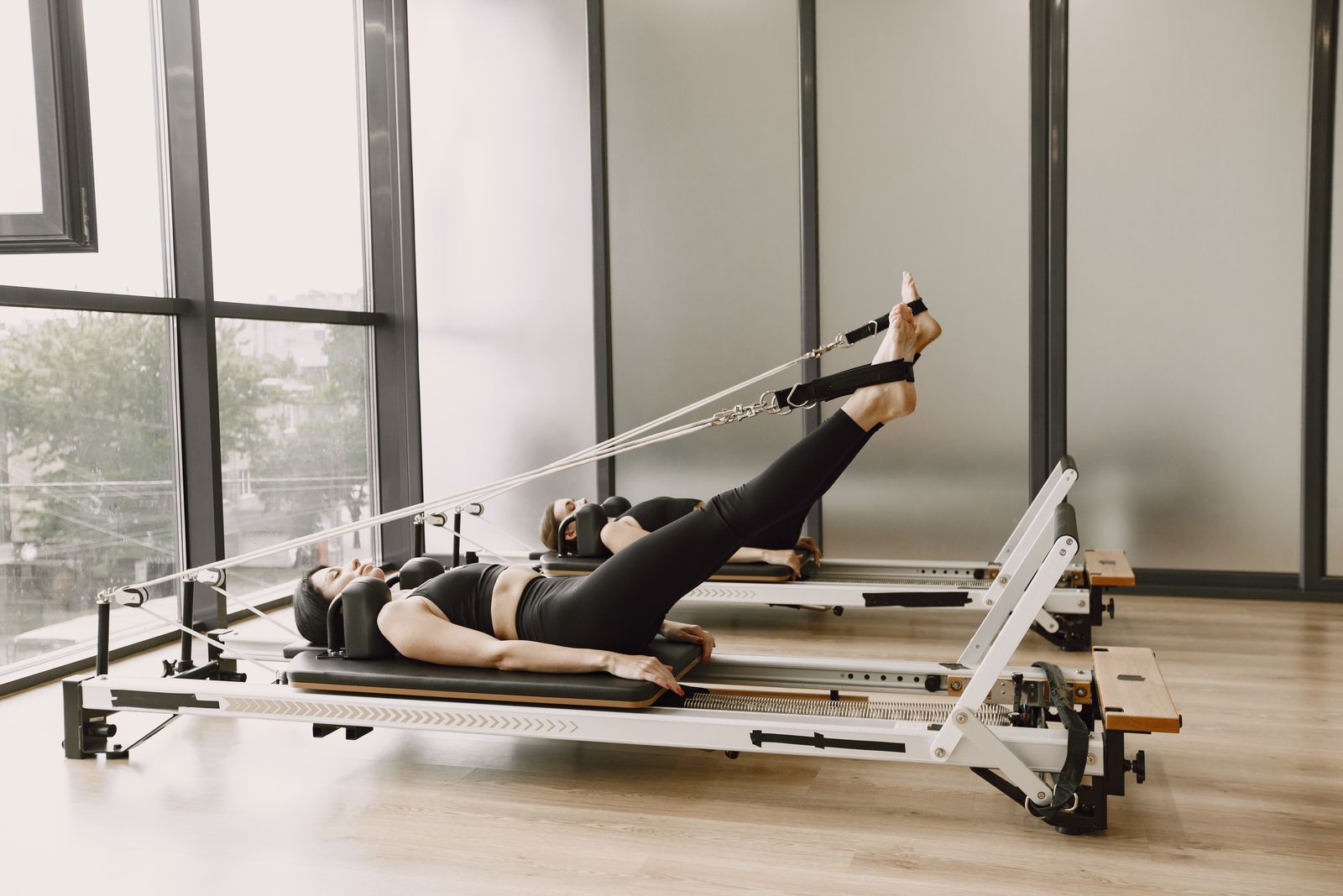
A bright studio with enormous windows. People in matching workout outfits moving slowly on long machines fitted with springs.
Everything looks calm, stylish, and completely different from a typical gym.
Someone in the comments says they felt transformed after a month.
Someone else claims Reformer Pilates replaced every other type of workout.
You look up the nearest studio.
One class: €30.
Your first thought?
What exactly am I paying for?
What is a Pilates reformer?
A reformer is a specialised exercise machine used in Pilates.
At first glance, it resembles a narrow bed with a sliding platform.
It also has springs, straps, bars, and adjustable resistance.
You can perform exercises lying down, sitting, standing, or holding straps attached to the machine.
The springs provide resistance, while the moving carriage challenges your control.
Consider a basic leg exercise.
You lie on your back and slowly straighten your legs to move the platform.
It sounds simple.
But you also need to control the position of your pelvis, knees, and torso.
From the outside, the movement looks effortless. During the exercise, your muscles may feel otherwise.
How is it different from mat Pilates?
With mat Pilates, you mainly use your own body weight. Some classes also include small accessories.
A reformer adds adjustable spring resistance and gives the instructor more ways to modify an exercise.
Here's something people often miss, though.
Springs don't always make a movement harder.
Depending on the exercise, they can actually provide assistance.
That makes the machine adaptable to people with different levels of experience.
Of course, the instructor and the programme matter.
The main difference is not that the reformer is automatically superior. It's that the machine offers different ways to organise and adjust a workout.
If your goal is to build strength gradually, compare this format with how to start strength training at home.
Can Reformer Pilates help you lose weight?
This is probably one of the biggest questions surrounding the trend.
And it's worth separating marketing from reality.
Reformer sessions involve physical effort and use energy.
But the machine doesn't have a special ability to burn fat that other forms of movement lack.
If weight loss is your goal, your overall energy balance, eating habits, daily activity, and consistency matter much more than the name of your workout.
Pilates can absolutely be part of a broader routine.
What it cannot do is guarantee visible weight loss simply because you attend two classes per week.
Be cautious about promises such as “lose five kilograms in ten sessions.”
Results depend on many factors, and those claims are not realistic guarantees.
Will you actually get stronger?
A reformer can challenge your core, legs, arms, and back.
With regular practice, you might notice better movement control and find certain exercises easier.
But is it better for building strength than conventional resistance training?
There's no convincing evidence for such a broad claim.
A 2025 systematic review of Pilates for people with certain musculoskeletal conditions in their arms or legs found some potential benefits for pain and disability.
However, the researchers rated the certainty of the evidence as very low. They could not establish that Pilates was superior to other exercise approaches.
That review doesn't prove that reformer classes outperform strength training, and it shouldn't be presented as if it does.
If increasing muscle strength is your main objective, a well-planned resistance-training programme with progressive overload remains an important option.
Why are classes so expensive?
The explanation is less glamorous than the social media videos.
Studios have to purchase and maintain specialised equipment.
Reformer classes also tend to have fewer participants than large mat-based sessions.
An instructor needs to explain machine settings and monitor technique.
Those costs affect the price.
In some German studios, a single reformer class can cost around €30.
The actual amount varies widely by city, studio, class size, and package.
Now imagine attending twice a week.
At €30 per session, eight classes would cost approximately €240.
That's a substantial monthly expense, especially if you already pay for a gym membership.
Who might genuinely enjoy Reformer Pilates?
Imagine two situations.
In the first, you sign up for a gym but keep postponing your visits.
You don't enjoy planning your own workouts. After a month, you stop going altogether.
In the second, you book a small-group Pilates class.
The time is fixed. The instructor is waiting. The exercises are already planned.
Maybe that structure is exactly what you need to stay consistent.
If so, the classes may be money well spent.
But if you already enjoy training at home or in a conventional gym, there's no need to switch just because the reformer is fashionable.
The best workout isn't necessarily the newest or most expensive.
It's one that suits your goals and that you can realistically keep doing.
What if you have back pain?
Pilates is often associated with improving movement control and strengthening muscles around the trunk.
Some forms of exercise may help certain people manage back pain.
But putting an exercise on a reformer doesn't automatically turn it into medical treatment.
If you have persistent pain, an injury, limited mobility, or are recovering from surgery, ask a healthcare professional what type of activity is appropriate.
Pregnancy and the period after childbirth may also require individual modifications.
And you shouldn't push through pain during a class.
How can you try it without wasting money?
Don't buy a large package before your first session.
Start with an introductory class designed for beginners.
Ask how many people will attend and whether the instructor explains the equipment.
During the session, pay attention to more than how hard the exercises feel.
Do you feel comfortable asking questions?
Does the instructor have time to correct your technique?
Do you enjoy the atmosphere?
Could you realistically afford both the time and money to attend regularly?
You might leave convinced you've found your favourite form of exercise.
Or you might realise that mat Pilates at home and your regular gym suit you better.
Both outcomes are completely reasonable.
So is Reformer Pilates worth the price?
Yes, if you enjoy the format, the exercises suit your abilities, and the cost fits comfortably within your budget.
Not necessarily, if you're expecting results that are impossible to achieve through other types of training.
A reformer is not a miracle machine.
It's another way to move, challenge your muscles, improve your control, and potentially enjoy exercising.
Pay for it because it genuinely works for you, not because it looks beautiful on social media.
Sources & further reading
General information only; not medical, legal or financial advice.