The waistband gaps, the thighs feel too tight, and the view from behind looks nothing like the product photo.
Sound familiar?
The good news is that your body usually isn't the problem. Jeans can fit very differently, even when the label shows exactly the same size.
Here's what to look for if you want denim that feels comfortable and looks the way you hoped it would.
1. Start with the rise, not the size
One of the first things to consider is where the waistband sits.
High-rise jeans usually reach the natural waist or higher. They work well with tucked-in shirts, cropped tops and shorter jackets.
Mid-rise jeans sit below the natural waist and can be an easy everyday option.
Low-rise jeans sit closer to the hips and are often associated with early-2000s fashion.
But higher doesn't automatically mean better.
If a high waistband presses uncomfortably into your stomach when you sit down, the jeans may not be right for you, even if they look great while you're standing.
A good rise should feel comfortable when you're moving, sitting and going about your day.
There's no need to follow rigid rules about which rise is supposedly allowed for your body shape.
2. Straight, wide-leg or mom jeans: which cut should you try?
Sometimes changing the cut makes a bigger difference than changing the size.
These are some of the most common styles worth comparing.
Don't assume a certain cut is off-limits because of your height or body shape.
Wide-leg jeans, for example, can look striking on shorter women when the length and overall outfit work together.
And straight jeans don't have to look basic. Add a shirt, a belt and well-chosen shoes, and they can feel wonderfully polished.
Try at least two or three different silhouettes, including one you wouldn't normally pick.
The unexpected option might be the best one.
| Cut | What it looks like |
|---|---|
| Straight | A relatively straight leg from the knee to the hem. |
| Wide-leg | Generous width through the legs, creating a relaxed silhouette. |
| Mom jeans | Often high-waisted, roomier around the hips and tapered towards the ankle. |
| Slim | A closer fit without necessarily being as tight as skinny jeans. |
| Bootcut | Fitted higher up, with a gentle flare from the knee. |
3. Look at the fabric
Two pairs of jeans can look almost identical on a hanger yet feel completely different when worn.
The fabric composition often explains why.
100% cotton denim is usually less stretchy and tends to hold a more structured shape. Some pairs can feel stiff, especially at first.
Cotton with elastane has more give, which may feel particularly comfortable in closer-fitting styles.
However, very stretchy denim can sometimes lose its shape after several hours of wear. Fabric quality matters as much as fibre content.
Here's a useful fitting-room test: squat gently, walk around and check the jeans again.
If the knees have already bagged out or the fabric has developed pronounced folds, another pair may be worth trying.
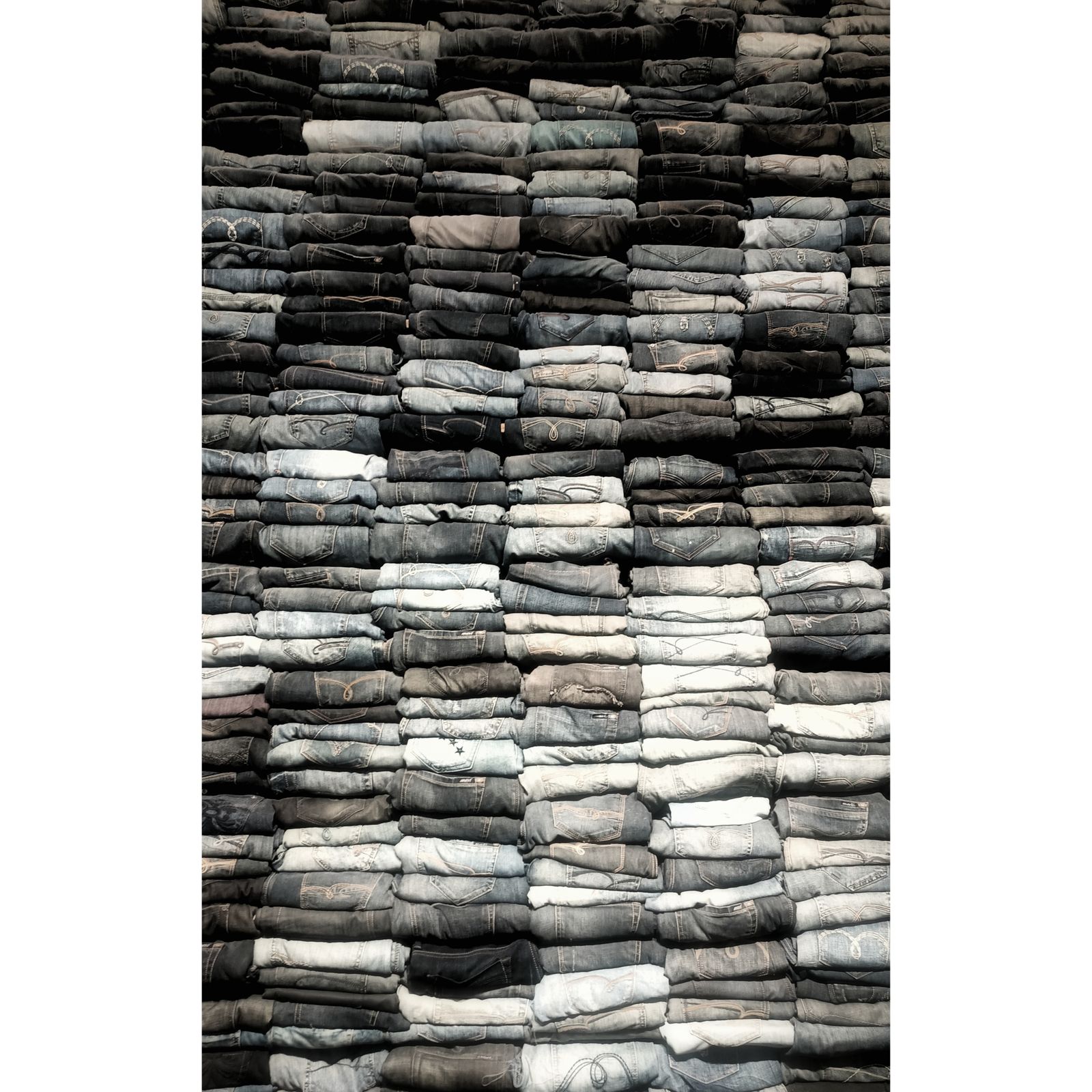
4. Length and back pockets make a difference
Sometimes the waist and hips fit beautifully, but the overall look still feels slightly off.
The length may be responsible.
Wide-leg jeans that bunch heavily over your shoes can create a different effect from the one you imagined. A cropped pair may also change the proportions of an outfit.
That's why it's worth trying jeans with shoes similar to those you'll actually wear.
Back pockets matter too.
Their size, placement and distance from each other can change the visual balance of the jeans.
Pockets positioned very low may make the jeans appear to sit lower than they do. Tiny pockets on a generously cut pair can sometimes look out of proportion.
There's no universal rule here.
Look at the jeans from behind as well as from the front, ideally in ordinary lighting rather than relying only on a brightly lit fitting-room mirror.
5. Give your jeans a two-minute test before buying
You've found a pair you love. They look great in the mirror, and you're ready to head to the till.
Wait another two minutes.
Sit down. The waistband shouldn't dig painfully into your stomach, and the fabric shouldn't feel uncomfortably tight.
Squat and take a few steps. You should be able to move without feeling as though the jeans are fighting against you.
Check the back waistband. If there's a large gap, another cut or rise may fit better.
Look at the hem. Think about whether you'll wear the jeans with trainers, ankle boots or heels.
And don't buy jeans that feel painfully tight just because someone promises they'll stretch.
Some fabrics relax with wear, but predicting exactly how much isn't easy.
The label isn't the final word
You might wear a size 28 in one brand, a 29 in another and something entirely different elsewhere.
That's normal.
Don't force yourself into a particular number simply because it's the size you've always bought.
Great jeans aren't the ones that obey every fashion rule. They're the ones you enjoy wearing, that fit comfortably and suit your everyday life.
Sometimes all it takes is trying the pair you almost walked past.
General information only; not medical, legal or financial advice.