Picture a familiar morning.
You're getting ready for work, pull on your favourite black sweater, and notice a few white flakes on the shoulders.
Again.
You bought an anti-dandruff shampoo not long ago. You used it for almost two weeks, and it genuinely seemed to work.
Now you're right back where you started.
Maybe the shampoo was no good. Maybe your hair gets oily too quickly. Maybe you simply need to wash it more often.
But the explanation isn't always that simple.
Why does dandruff go away and then return?
Dandruff isn't necessarily something you can eliminate with one short course of shampoo.
It can be related to how your scalp reacts to Malassezia yeasts, which naturally live on human skin, as well as to inflammation and individual scalp characteristics.
Seborrhoeic dermatitis is one condition that can cause recurring flaking.
A shampoo may reduce the flakes and itching without permanently changing the underlying tendency for symptoms to recur.
So when dandruff comes back, it doesn't automatically mean the product failed.
Sometimes the answer is not another bottle but a maintenance routine that suits your scalp.
That's worth considering before you buy your next shampoo.
Mistake 1: Stopping treatment as soon as the flakes disappear
Imagine that after four washes, your dandruff is barely visible.
You're pleased with the result and switch back to your regular shampoo.
A couple of weeks later, the flakes return.
Some medicated shampoos are designed to be used more frequently at first and less frequently afterward to help keep symptoms under control.
For example, the NHS describes using ketoconazole shampoo twice weekly for two to four weeks, followed by once every one to two weeks to help prevent dandruff from returning.
That schedule applies to a particular active ingredient. It is not a universal rule for every anti-dandruff product.
Always check your own product's instructions and ask a pharmacist or dermatologist if you're unsure.
If your roots also become oily quickly, it helps to look separately at why hair gets greasy the day after washing.
Mistake 2: Washing the hair but barely treating the scalp
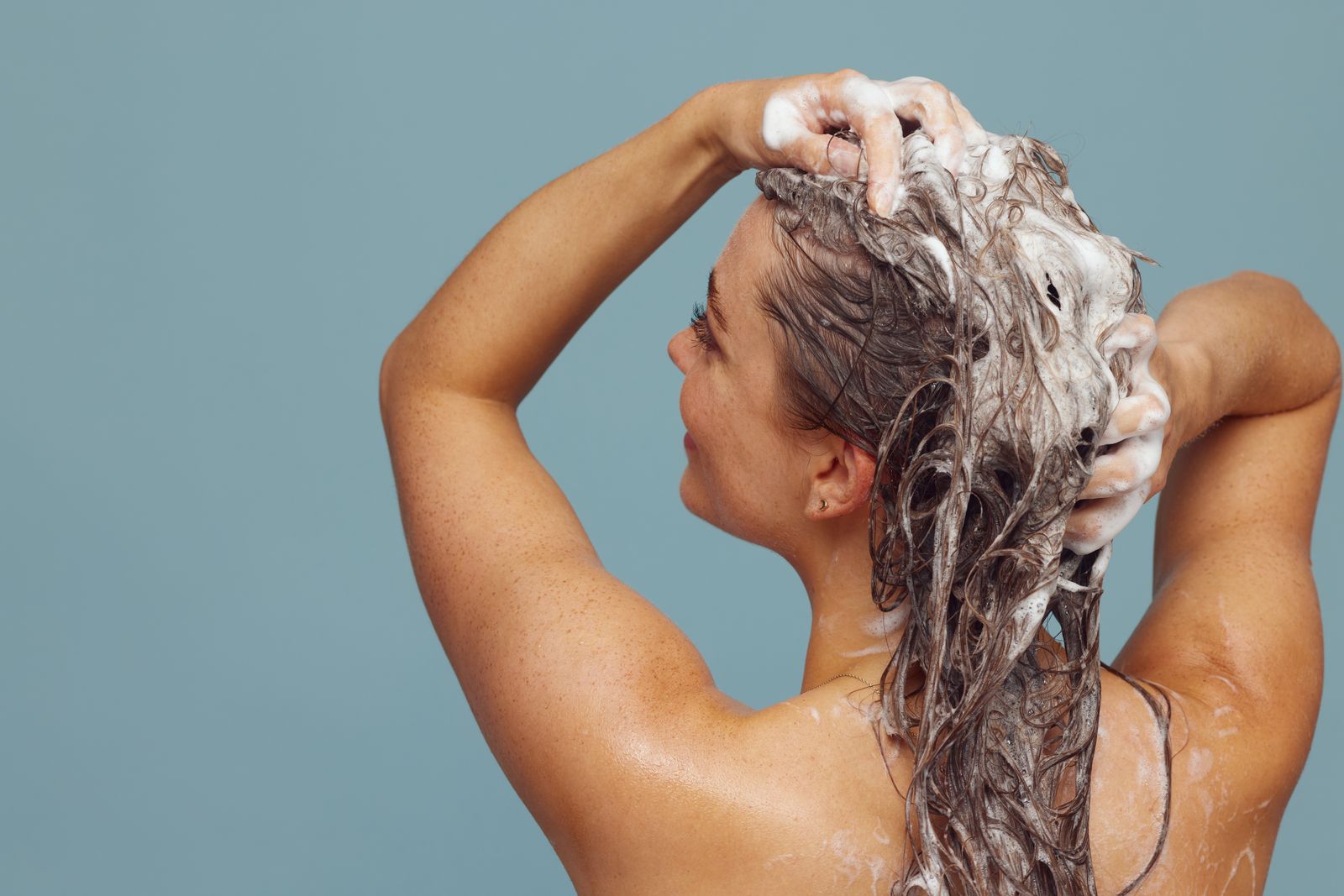
You wet your hair, squeeze shampoo into your palms, make some foam, and rinse immediately.
It seems reasonable.
But anti-dandruff shampoo is intended to work on the scalp, where the flakes originate.
Some active ingredients also need a few minutes of contact time.
Ketoconazole shampoo, for example, is generally left on the scalp briefly before rinsing, according to the instructions for the product.
If you rinse everything away immediately, you may not get the expected benefit.
Next time you wash your hair, check three things: where you're applying the shampoo, how long you leave it on, and how often you use it.
Sometimes the problem is the routine rather than the product itself.
Mistake 3: Treating every flaky scalp as dandruff
Not all scalp flaking has the same cause.
A new hair dye, styling product, or shampoo may irritate the skin.
Psoriasis can also produce visible scales, but it may require a different approach.
Certain scalp infections can cause flaking alongside patches of hair loss.
These conditions aren't always easy to distinguish at home.
Pay particular attention to marked redness, pain, pronounced itching, or other unusual symptoms.
If several anti-dandruff shampoos have not helped, it may be time to reconsider the diagnosis rather than keep switching products.
A dermatologist can examine the scalp and recommend an appropriate next step.
Would washing your hair more often help?
There isn't one washing schedule that works for everyone.
If your scalp becomes oily quickly, regular cleansing may help remove oil and loose flakes.
That doesn't mean everyone should use medicated shampoo every day.
The right frequency depends on your scalp, hair type, the product you use, and how your skin tolerates it.
Overly harsh cleansing can cause irritation too.
Instead of assuming that more washing is always better, aim for a routine that keeps your scalp comfortable.
And remember: oily hair and dandruff are not the same thing.
Hair can become greasy without dandruff, while flaking can occur even when the scalp doesn't feel particularly oily.
Which shampoo ingredients can help?
Anti-dandruff products contain different active ingredients.
Ketoconazole is an antifungal ingredient used for dandruff and seborrhoeic dermatitis.
Selenium sulfide is used in some anti-dandruff formulations.
Salicylic acid can help remove scales, although it doesn't address every possible cause of flaking.
Different ingredients do different things. The shampoo that helped your friend may not be the right one for you.
Availability also varies by country.
For example, zinc pyrithione appears in some US-oriented recommendations, but its use in cosmetic products has been prohibited in the European Union since March 2022.
Rather than trusting claims such as “gets rid of dandruff forever,” check the active ingredient, local product instructions, and professional advice when necessary.
When should you stop experimenting on your own?
If you've used an appropriate anti-dandruff shampoo as directed for four weeks and haven't improved, contact a healthcare professional.
Seek advice sooner if your scalp becomes very red, swollen, painful, or intensely itchy, or if you notice scaly patches elsewhere.
Patchy hair loss is another reason to have your scalp examined.
In these situations, buying one more random shampoo may only delay the right treatment.
What should you do when dandruff keeps coming back?
Start with the basics.
Check the active ingredient in your shampoo.
Make sure you're using it correctly and not ending the initial course too early.
Notice whether symptoms get worse after introducing a different hair product.
If the flakes keep returning despite correct use, ask a pharmacist or dermatologist whether another ingredient or a maintenance schedule might help.
And don't try to scrub the problem away aggressively.
Dandruff doesn't mean you're unhygienic.
It's a common scalp problem, and recurring symptoms can often be managed even when they can't be permanently eliminated.
Sometimes the breakthrough isn't a tenth bottle of shampoo. It's understanding what your scalp actually needs.
Sources & further reading
General information only; not medical, legal or financial advice.