A hair dryer before work, a straightener for an evening out, a curling tool at the weekend: none of these moments seems dramatic on its own. The difficulty is that hair records repeated heat and tension over time, even when it still looks smooth immediately after styling.
Protecting hair therefore does not require abandoning every tool. It means understanding where damage accumulates, deciding which part of the finished look matters most and using the least intense routine that still gives a result you enjoy.
A gentler way to use heat
Flat irons and curling tools should generally meet fully dry hair unless the device is specifically designed for wet use. Water inside the hair fibre can turn to steam under intense heat. Blot with a towel rather than rubbing, then air-dry partly or use a dryer with steady movement.
Start lower than your usual setting and increase only if one controlled pass does not work. Fine, lightened or already damaged hair often needs less heat than dense, untreated hair. Repeated passes over the same section can be more damaging than one careful pass.
- Work in small sections.
- Keep the dryer moving and maintain distance.
- Let hair cool before restyling the same area.
What heat changes inside the hair
The visible hair shaft is made largely of keratin and cannot repair itself in the way living skin can. High heat and repeated mechanical tension can roughen the cuticle, reduce moisture and weaken the points that bend most often. Damage therefore tends to accumulate rather than disappear after a conditioning mask.
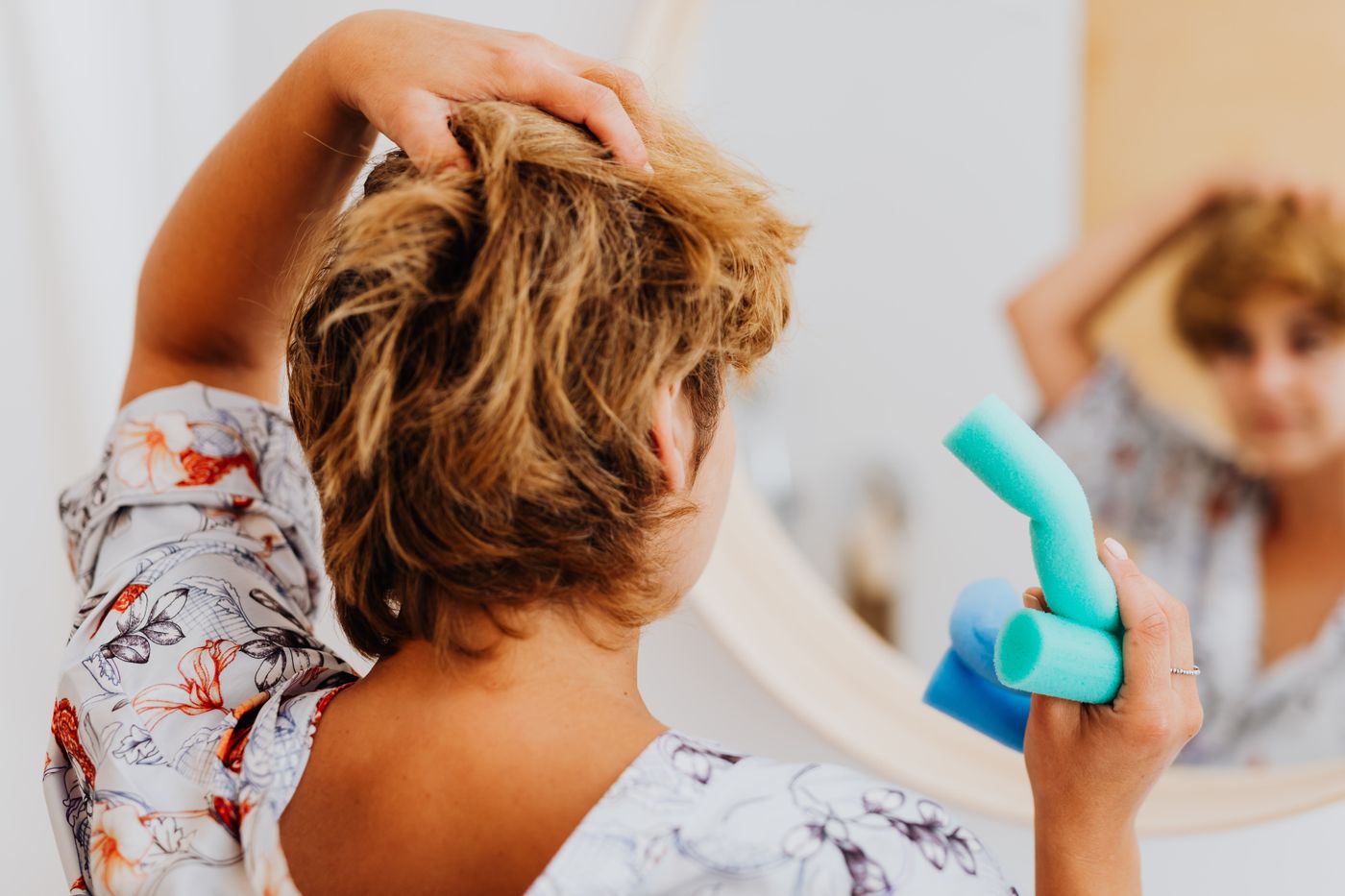
Texture changes the experience. Fine or lightened hair may show breakage quickly, while dense hair can require more time and airflow to dry. Curl patterns can lose definition when the same sections are stretched and heated repeatedly, even if the ends still look glossy after styling.
Think of styling as a heat budget
There is no universal safe temperature that suits every tool and every head of hair. A more useful approach is to reduce total exposure: fewer passes, less frequent sessions and no long pause with a hot plate held on one spot.
For example, someone styling for a workday might rough-dry on a moderate setting, smooth only the front sections and leave the lengths alone. The result may be less uniform than a full high-heat routine, but it concentrates effort where it changes the look most and gives vulnerable ends a break.
Protection products and early warning signs
A heat-protecting product can reduce friction and improve heat distribution, but it does not make high temperatures harmless. Apply the amount and method on the label; soaking the hair in product is not extra protection.
More tangling, rough ends, loss of curl pattern and small broken hairs suggest that the routine needs adjusting. Reduce frequency, trim damaged ends when appropriate and alternate polished styles with lower-heat options.
Sources & further reading
General information only; not medical, legal or financial advice.