Picture this: you're meeting a friend for coffee, and she smells incredible. Her perfume is soft, slightly sweet, with delicate floral notes.
Naturally, you ask what she's wearing.
A few days later, you buy the same fragrance, spray it onto your wrist and wonder what went wrong. Instead of those gentle flowers, all you can smell is something sharp and overwhelmingly sweet.
Your first thought? Maybe the bottle is fake.
But the explanation may have nothing to do with the bottle.
Why can the same perfume smell different on different people?
When you spray perfume onto your skin, its aromatic ingredients gradually evaporate into the surrounding air.
How quickly that happens depends on more than the perfume's formula.
Skin temperature, hydration and surface characteristics can influence the way individual fragrance ingredients evaporate.
Some notes may remain noticeable for longer on one person's skin, while they seem to fade into the background more quickly on someone else's.
This isn't simply perfume folklore. Researchers have observed differences in how fragrance compounds evaporate from the skin of different people.
However, the popular claim that everyone's skin has a different pH and therefore completely transforms a perfume is an oversimplification.
Your skin doesn't magically turn one fragrance into an entirely different one.
More often, the balance between the ingredients you notice changes over time.
And there's another factor: two people can perceive the very same smell differently.
Why does a perfume smell citrusy at first and like vanilla later?
You've probably noticed that a fragrance can smell quite different an hour after application.
That's partly because its aromatic ingredients evaporate at different rates.
Perfumers often describe fragrances using three groups of notes.
Top notes create the first impression. Citrus, light fruity scents and fresh green notes are common examples.
Heart notes help define the fragrance's character as the initial impression softens. Think rose, jasmine or spices.
Base notes tend to linger longer. These often include woody scents, musk accords and vanilla.
But don't take the fragrance pyramid too literally.
The ingredients don't appear one after another like actors stepping onto a stage. Many are noticeable at the same time, although their relative intensity changes.
Choosing a perfume based entirely on the first few seconds is a little like judging a film by its opening five minutes.
Citrus, fresh and green notes.
Rose, jasmine, spices.
Vanilla, woods, musk.
Fragrance notes can overlap. Their relative intensity changes over time.
Why do you stop smelling your own perfume after a while?
You spray your favourite perfume in the morning.
For the first ten minutes, you can smell it beautifully.
By lunchtime, however, it seems to have disappeared.
Your immediate conclusion might be: “This perfume has terrible staying power.”
But before spraying yourself another five times, consider something else.
Your sense of smell gradually adapts to familiar scents. Scientists call this olfactory adaptation.
When you're exposed to the same smell for an extended period, your sensitivity to it can decrease.
That doesn't necessarily mean the fragrance has disappeared. Other people may still be able to smell it.
If you're unsure, ask someone you trust whether your perfume is still noticeable.
Otherwise, you might accidentally create a far stronger scent trail than you intended.
Eau de Parfum or Eau de Toilette: which is better?
Two labels appear on perfume bottles particularly often.
Eau de Toilette (EDT) usually describes a lighter concentration of fragrance materials.
Eau de Parfum (EDP) generally contains a higher concentration.
But the terms aren't governed by one universal concentration standard.
And a higher concentration doesn't guarantee that every EDP will last longer than every EDT.
Longevity depends on the particular formula, ingredients and conditions in which the perfume is worn.
What's more, the EDT and EDP versions of a fragrance can differ in composition, not just strength.
The best approach is to try both rather than choosing entirely by the wording on the box.
How should you test perfume before buying it?
A few simple habits can save you from an expensive disappointment.
Start with a paper scent strip. A blotter helps you decide whether you like the fragrance's general direction.
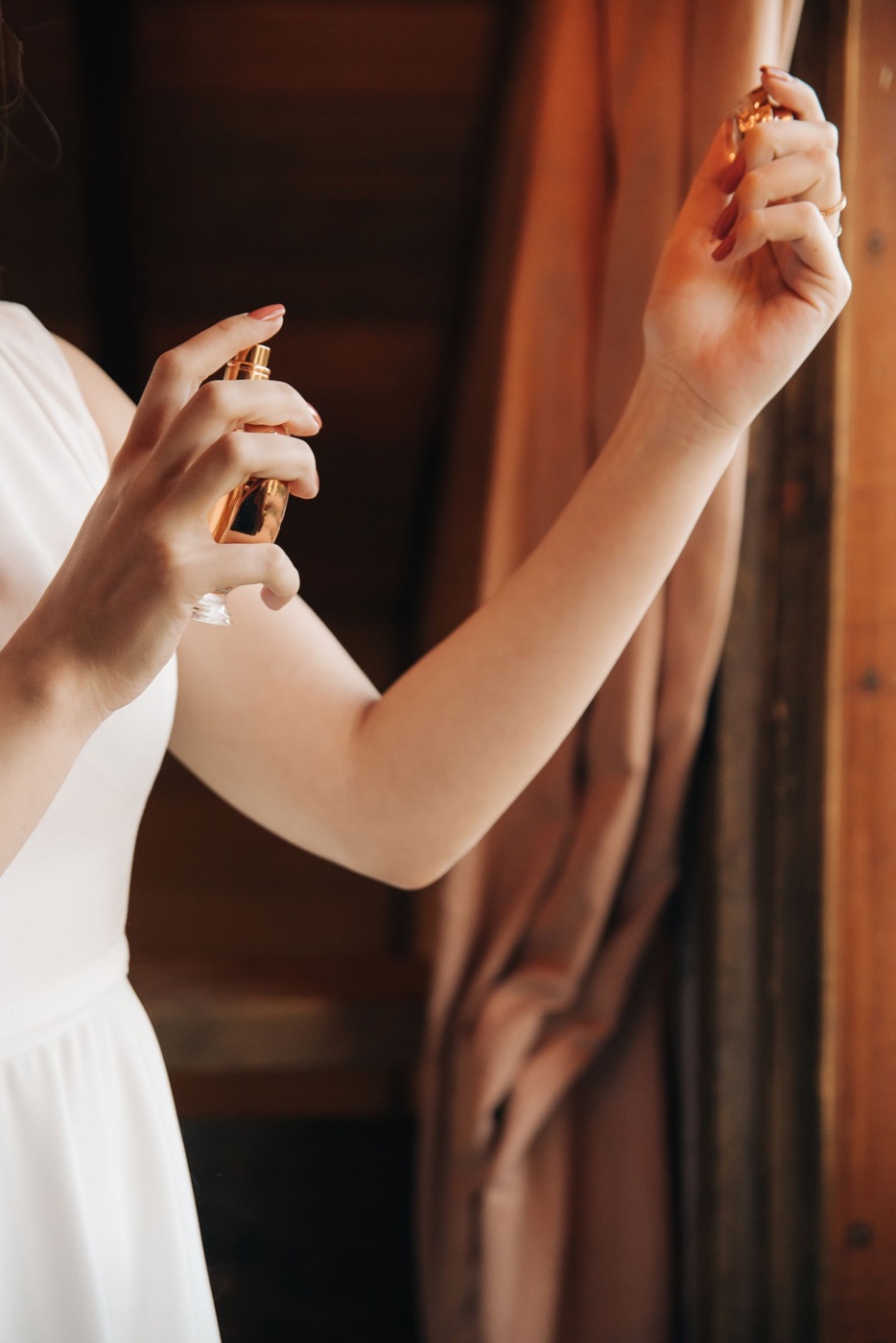
Then try it on your skin. If the perfume interests you, spray a little onto your wrist or forearm.
Don't rub your wrists together. Despite a common myth, rubbing doesn't physically destroy perfume molecules. It does change how the liquid spreads and may affect evaporation. When testing a fragrance, simply let it dry naturally.
Avoid testing ten perfumes in a row. After smelling several fragrances, the subtle differences can become harder to distinguish. Focus on two or three promising options.
Most importantly, don't buy an expensive bottle based only on the first spray.
Wear the fragrance for a few hours.
See whether you still enjoy it during an ordinary day, once the excitement of that first impression has faded.
Can you suddenly stop liking a perfume you once loved?
Absolutely.
Your perception of a fragrance can change with your physical condition, changes in your sense of smell, your surroundings and even the memories associated with a particular scent.
A perfume that reminds you of a wonderful holiday may feel completely different from one connected to a difficult period of your life.
So don't be surprised if a fragrance you adored a few years ago now seems too sweet, too intense or simply unlike you.
The perfect perfume isn't necessarily the most expensive or the most popular.
It's the one you enjoy wearing on your own skin, not just during the first five minutes but several hours later.
And sometimes finding it means no longer choosing fragrances solely because they smell amazing on someone else.
Sources & further reading
General information only; not medical, legal or financial advice.