Picture an ordinary morning.
You wake up, walk into the bathroom, switch on the light and look in the mirror.
And suddenly you wonder: “What exactly happened to my face overnight?”
Everything looked fine yesterday.
Today, your eyes seem smaller, there's puffiness underneath them and your cheekbones appear to have disappeared.
You think back to last night.
You barely drank any water. Dinner was nothing unusual. You didn't even go to bed particularly late.
Could it be your pillow?
Or perhaps that salty snack you had before bed?
And what if morning puffiness has very little to do with how much water you drank in the evening?
Why does your face become puffy after sleeping?
Let's start with an interesting detail.
Your body position affects how fluid is distributed while you sleep.
During the day, when you're standing or walking, gravity tends to encourage fluid to collect in the lower parts of your body.
At night, you spend several hours lying horizontally.
As a result, fluid can temporarily accumulate in facial tissues, particularly around the eyes.
That's one reason your eyelids may look puffy in the morning, even when your face looked completely normal the evening before.
Once you get up and start moving, fluid distribution gradually changes.
If mild puffiness disappears within a few hours, it's usually not a reason to worry.
However, swelling that keeps getting worse or doesn't resolve deserves medical attention.
Reason 1: You may have eaten more salt than you realised
Imagine a Friday evening.
You order sushi, add some soy sauce, snack on salted nuts and go to bed.
Nothing particularly unusual.
But the next morning, your face looks noticeably puffier.
Sodium plays an important role in regulating your body's fluid balance.
Eating a lot of salt can contribute to temporary fluid retention.
And it's not only about adding salt at the table.
Ready-made sauces, processed meats, snacks, convenience foods and restaurant meals can contain significant amounts.
That doesn't mean you must give up your favourite foods entirely.
But if you repeatedly notice puffiness after particularly salty dinners, it's worth paying attention to the pattern.
Reason 2: You spend enough time in bed but don't sleep well
You probably know the feeling.
You go to bed at eleven and wake up at seven.
Eight hours of sleep, at least on paper.
Yet you feel as though you slept for only three.
How your face looks can be influenced by both sleep duration and sleep quality.
Poor sleep may make puffiness around the eyes more noticeable.
The position of your head while sleeping can also affect how pronounced the swelling appears in the morning.
Consider your sleeping habits.
If it's comfortable for you, slightly elevating your head may help with mild morning puffiness.
But don't expect a new pillow to solve every possible cause of facial swelling.
Reason 3: Allergies may be involved
Now imagine a different situation.
You wake up with puffy eyelids, but your eyes also itch, your nose is blocked and you keep sneezing.
And it happens almost every morning.
Allergies may be worth considering.
Some people react to house dust mites, pollen or animal allergens.
Potential triggers can also be present in the bedroom, including bedding, pillows and surrounding surfaces.
However, you can't identify an allergy simply by looking at your face.
If swelling comes with itching, a runny nose or watery eyes, discuss those symptoms with a healthcare professional.
And don't rush to buy expensive “hypoallergenic” pillows before finding out whether allergies are actually involved.
What about creams, facial massage and cold spoons?
The internet is full of ways to supposedly remove puffiness in five minutes.
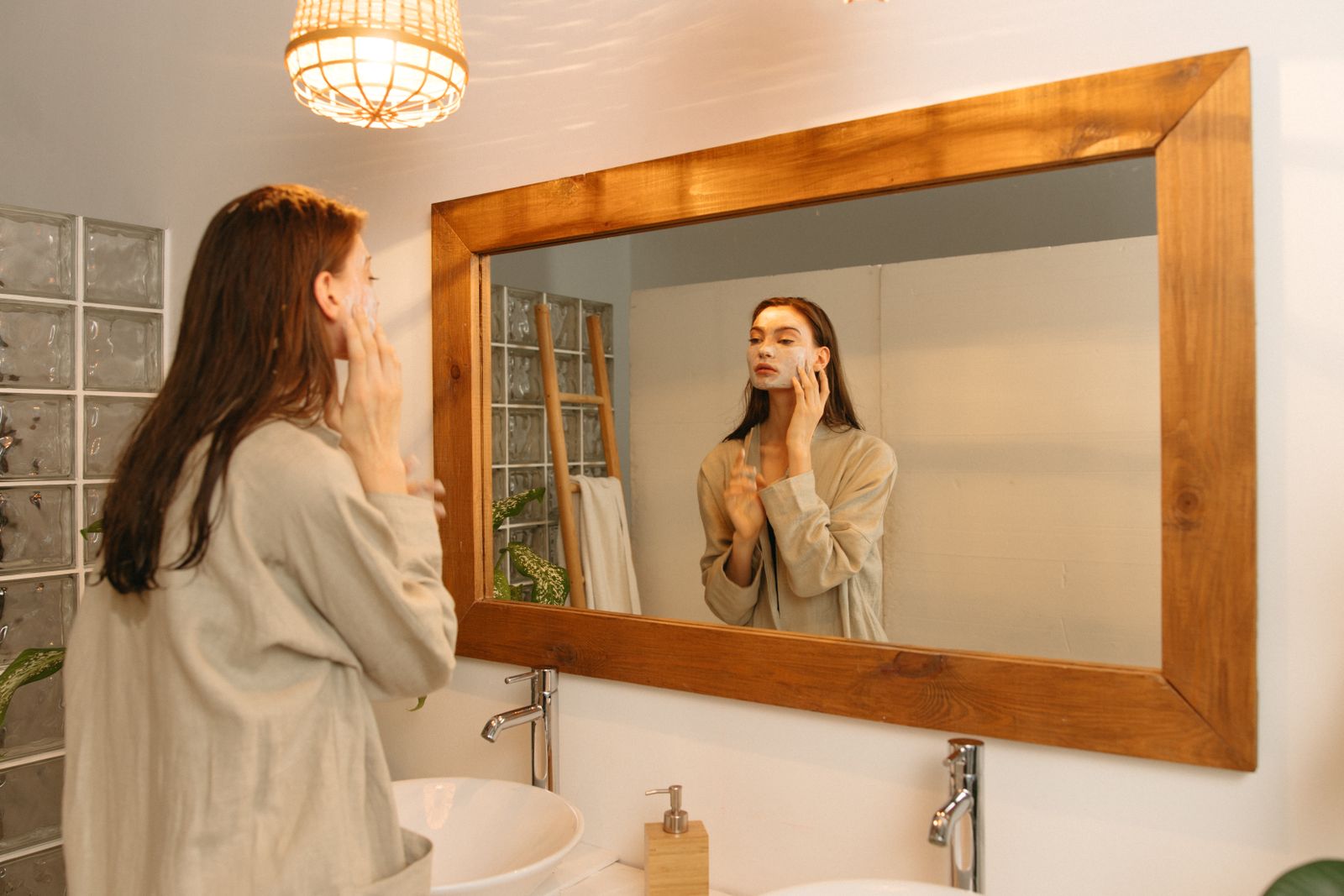
Cold spoons, rollers, facial massage stones, special masks and expensive serums.
But which of these ideas makes sense?
A cool compress may temporarily reduce mild puffiness, especially around your eyes.
For example, you could place a clean, cool cloth over the area for a few minutes.
Don't put ice directly on your skin, though. Extreme cold can cause irritation or injury.
Gentle facial massage may make some people feel less puffy, but there's no good reason to promise that it will permanently solve the problem.
And most importantly, if an underlying medical condition is causing swelling, cosmetic treatments won't replace appropriate care.
You don't necessarily need an expensive facial roller when a simple cool compress may provide temporary relief.
Should you just stop drinking water in the evening?
No.
Morning puffiness doesn't automatically mean you drank too much water.
And it certainly isn't a reason to severely restrict your fluid intake so that your face looks slimmer the next day.
Your body needs an appropriate fluid balance.
Drink according to your needs and any medical advice you've received.
Taking diuretics on your own just to reduce facial puffiness can be dangerous.
These medicines can disturb fluid and electrolyte balance, and their use depends on the actual cause of swelling.
When should morning swelling be checked by a doctor?
Mild puffiness after sleep isn't the same as significant facial swelling.
Arrange a medical appointment if:
Facial swelling can sometimes be associated with kidney or thyroid conditions, allergies or medication effects.
But its cause can't be determined simply from appearance.
Important: sudden swelling of the tongue, lips or throat, particularly with difficulty breathing or swallowing, requires emergency medical care.
If one side of your face becomes swollen and you also develop severe pain, redness or fever, seek urgent medical assessment.
- Your face swells regularly and the puffiness doesn't go away.
- The swelling is new and gradually getting worse.
- Your hands, legs or other parts of your body are also swollen.
- The symptoms appeared after you started a new medicine.
- The swelling comes with other unusual symptoms.
What could you try tomorrow morning?
You don't need to change your entire lifestyle because of a little puffiness under your eyes.
Start with a few simple observations.
Over several days, notice what you ate for dinner, how well you slept and how quickly any morning swelling disappears.
If you'd like to refresh your face, try a cool compress.
Aim for more consistent sleep and avoid making particularly salty meals an everyday habit.
But don't turn every morning into a search for imperfections in the mirror.
Sometimes your face simply looks a little different when you wake up than it did the night before. And that's normal.
The important thing is knowing the difference between temporary morning puffiness and symptoms that need medical attention.
Sources & further reading
General information only; not medical, legal or financial advice.